Timing wedding food service is one of the most important elements in creating a smooth and enjoyable celebration. Even the best menu can feel underwhelming if guests are left waiting too long or rushed through their meal. The right timing ensures that guests remain comfortable, engaged, and able to enjoy every stage of the day without disruption.
Wedding days are filled with key moments, from the ceremony and drinks reception to speeches and evening entertainment. Catering must fit naturally around these moments, supporting the flow rather than interrupting it. When food service is carefully timed, it enhances the atmosphere and keeps energy levels consistent.
This guide explains how to plan wedding food service so it feels balanced, relaxed, and perfectly aligned with the day.
Understand the Full Wedding Day Timeline
Before making any decisions about food service, it is essential to understand the complete timeline of the wedding day. Catering does not operate in isolation, it must align with ceremonies, photography, speeches, and entertainment.
A clear timeline provides the foundation for all catering decisions.
- Map out ceremony start and finish times
- Include travel or venue transition periods
- Factor in photography sessions and guest mingling
- Identify when the evening reception will begin
Start With Well-Timed Welcome Drinks
Welcome drinks are the first opportunity to set the tone for the celebration. They should be available as soon as guests leave the ceremony, preventing confusion or unnecessary waiting.
Immediate service helps guests relax and settle into the event.
- Ensure drinks are ready before the ceremony ends
- Position service areas where guests naturally gather
- Offer both alcoholic and non-alcoholic options
- Keep service quick and accessible
Use Canapés to Maintain Momentum
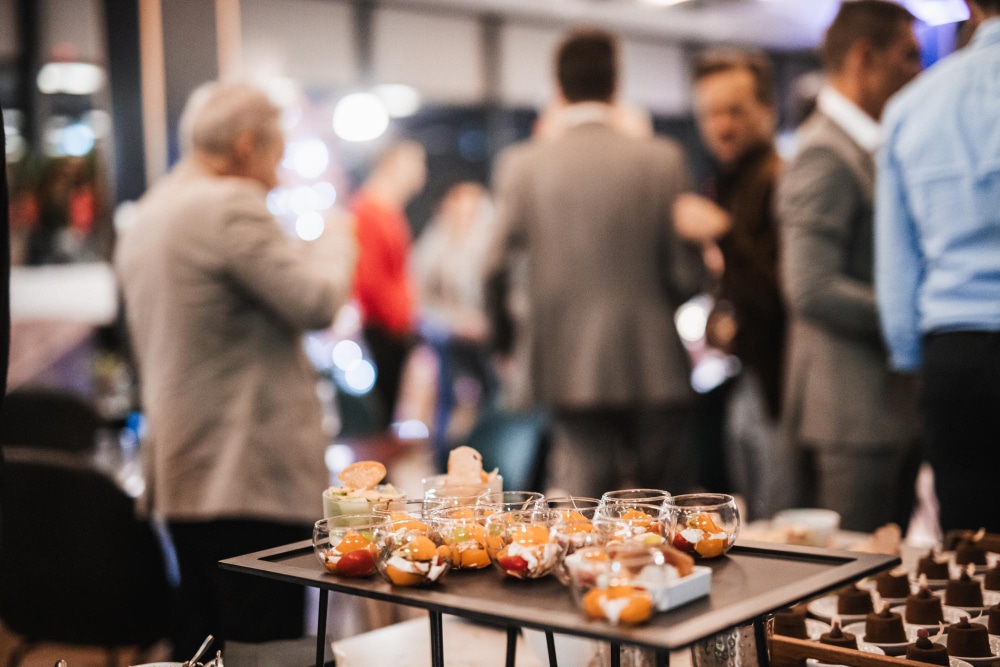
During the drinks reception, guests are often socialising while the couple takes photographs. Canapés help maintain energy levels and prevent guests from becoming hungry before the main meal.
Small bites keep the atmosphere lively.
- Serve canapés shortly after drinks begin
- Offer a steady flow rather than large batches
- Choose bite-sized items that are easy to handle
- Avoid overly heavy or messy options
Guide Guests Smoothly Into the Wedding Breakfast
The transition from drinks reception to dining should feel organised and natural. Guests should know when and where to move without confusion or delay.
Clear direction prevents disruption.
- Announce when tables are ready
- Provide clear seating plans or table guides
- Allow guests time to settle before service begins
- Ensure catering staff are prepared to start promptly
Begin the First Course Without Delay
Once guests are seated, the first course should follow within a reasonable timeframe. Long waits at this stage can reduce energy and create frustration.
A prompt start sets the tone for the meal.
- Begin service within 15 to 20 minutes of seating
- Ensure drinks are served before the first course
- Coordinate kitchen timing with guest readiness
- Maintain consistency across all tables
Maintain a Comfortable Pace Between Courses
The spacing between courses plays a major role in guest comfort. Meals that move too quickly feel rushed, while long gaps can cause restlessness.
Balanced pacing keeps guests engaged.
- Allow around 20 to 30 minutes between courses
- Clear plates efficiently before the next course
- Monitor the room’s energy and adjust if needed
- Coordinate with speeches and other activities
Position Speeches at the Right Moments
Speeches are a key part of the wedding day, but they must be carefully timed around food service. Interrupting meals can lead to cold dishes and distracted guests.
Strategic placement improves the experience.
- Schedule speeches between courses
- Avoid serving food during speeches
- Keep speeches within a reasonable length
- Communicate timing clearly with speakers
Align Cake Cutting With the Meal Flow
The cake cutting ceremony often sits between the main meal and dessert or shortly after. Its timing should feel like a natural progression rather than an interruption.
This moment should enhance the overall flow.
- Plan cake cutting after the main course
- Ensure photographers are ready in advance
- Transition smoothly into dessert or coffee
- Keep the moment visible to guests
Allow Time for Relaxation After the Meal
Once the wedding breakfast is complete, guests benefit from a short break before the evening celebrations begin. This time allows them to relax and reset.
A pause prevents fatigue and maintains energy.
- Allow 30 to 45 minutes after dessert
- Open bar areas for casual drinks
- Encourage guests to move freely around the venue
- Prepare evening spaces quietly in the background
Time Evening Food to Match Guest Energy
Evening catering should be introduced when guests begin to feel hungry again. Serving too early or too late can disrupt the flow of the celebration.
Well-timed food supports the atmosphere.
- Serve evening food two to three hours after dinner
- Align service with peak dancing periods
- Avoid overlapping with key entertainment
- Announce availability clearly
Avoid Overlapping Catering With Key Moments
Food service should never compete with important moments such as speeches, first dances, or entertainment. Overlapping can divide attention and reduce the impact of both elements.
Careful coordination keeps focus where it belongs.
- Review the timeline with all suppliers
- Avoid serving food during major moments
- Pause service when necessary
- Resume smoothly once the moment ends
Keep Service Consistent Across All Guests
Guests should have a similar experience regardless of where they are seated. Uneven service can lead to some tables finishing much earlier than others.
Consistency improves overall satisfaction.
- Serve tables in a structured order
- Ensure sufficient staff for the guest count
- Monitor service progress across the room
- Adjust pacing if delays occur
Plan for Flexibility Without Losing Control
Even the best-planned weddings can experience small delays. Flexibility allows catering to adapt without causing stress or noticeable disruption.
Preparation helps manage unexpected changes.
- Build small buffer periods into the timeline
- Communicate changes quickly with the catering team
- Adjust service pace where necessary
- Keep guests informed if needed
Ensure Drinks Service Supports Food Timing
Drinks service should complement food rather than compete with it. Guests should have access to refreshments without causing delays or congestion.
Balanced service enhances comfort.
- Serve drinks before each course
- Keep water available throughout the meal
- Avoid overcrowding bar areas during transitions
- Ensure staff are available to assist guests
Work Closely With Your Caterer and Planner
Professional caterers and planners play a key role in managing timing. Their experience helps ensure that all elements of the day align smoothly.
Collaboration creates a seamless experience.
- Share a detailed timeline with all suppliers
- Confirm roles and responsibilities clearly
- Hold planning meetings in advance
- Maintain communication throughout the day
Focus on the Guest Experience Above All
Ultimately, timing decisions should be guided by how guests experience the day. Comfort, enjoyment, and flow should take priority over rigid schedules.
A guest-focused approach ensures success.
- Avoid long waiting periods between stages
- Keep the atmosphere relaxed and enjoyable
- Ensure food is served at the right temperature
- Maintain a steady and natural rhythm
Conclusion
Timing wedding food service is about creating a natural flow that supports every stage of the celebration. From welcome drinks and canapés to the wedding breakfast and evening food, each moment should feel connected and well-paced. When catering aligns with the broader timeline, guests remain comfortable, engaged, and able to enjoy the day without interruption.
By understanding the full schedule, coordinating with key moments, and allowing for flexibility, couples can ensure that their wedding catering enhances rather than disrupts the experience. The result is a celebration that feels smooth, relaxed, and memorable from the first drink to the final bite.