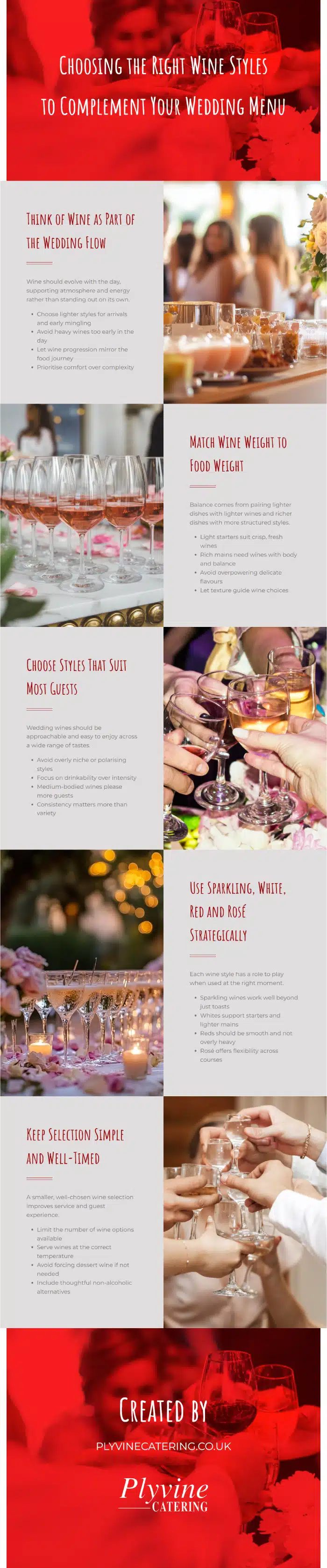
Wine plays a subtle but powerful role in how a wedding menu is experienced. While food often takes centre stage, wine quietly shapes the mood, pace, and enjoyment of the meal. Chosen well, it enhances flavours, supports conversation, and helps the day flow naturally. Chosen poorly, it can clash with food, tire the palate, or feel disconnected from the celebration.
Choosing the right wine styles to complement your wedding menu is not about impressing guests with obscure bottles or expensive labels. It is about balance, accessibility, and understanding how wine behaves alongside food over the course of a long day. This guide explores how to select wine styles that work harmoniously with your menu, your guests, and the rhythm of your wedding.
Understanding Wine as Part of the Whole Experience
Wine should never be chosen in isolation. It is part of a wider sensory experience that includes food, timing, atmosphere, and guest expectations. A wedding is not a tasting menu or a formal wine dinner. Guests will be talking, moving, and celebrating, often over many hours.
This context changes how wine should be selected. Approachability, balance, and versatility matter more than complexity or intensity.
- Wine should support conversation, not dominate it
- Balance is more important than boldness
- Guests will drink wine over several hours
- Consistency across the day matters
Considering the Flow of the Wedding Day
A wedding menu unfolds in stages, and wine choices should evolve alongside it. The wines that work well during a drinks reception are rarely the same ones that suit a seated meal or evening celebration.
Thinking about wine as a progression helps maintain energy and comfort throughout the day.
- Lighter wines suit arrivals and early mingling
- Structured wines work best with the main meal
- Fresher styles help reset the palate later
- Avoid heavy wines too early in the day
Knowing Your Guest Profile
One of the most important factors in wine selection is your guest list. Weddings bring together people with varying levels of wine knowledge and preference. The goal is not to challenge palates, but to please the majority.
Wine that is broadly appealing is usually the right choice for weddings.
- Avoid overly niche or polarising styles
- Choose wines that are easy to enjoy
- Consider age range and drinking habits
- Balance familiarity with quality
Matching Wine Weight to Food Weight
One of the simplest and most effective wine principles is matching weight to weight. Light dishes suit lighter wines, while richer dishes need wines with more body.
This prevents wine from being overwhelmed or overpowering the food.
- Light starters pair well with lighter wines
- Rich mains need wines with structure
- Avoid pairing delicate dishes with heavy wines
- Let food texture guide wine choice
Wine Styles for Welcome Drinks and Canapés
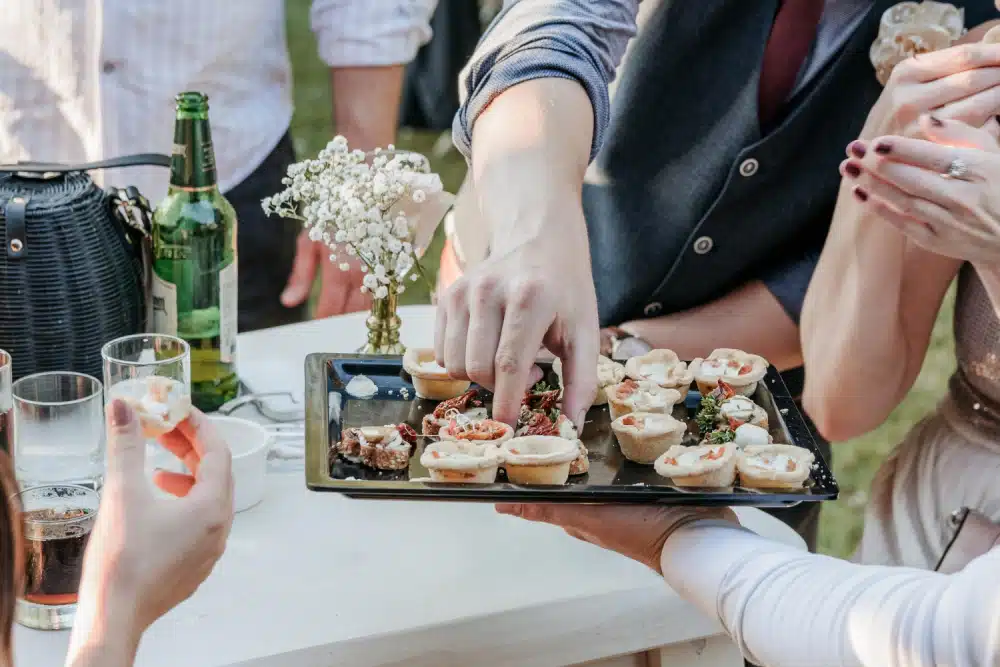
Welcome drinks and canapés set the tone for the day. Wines served at this stage should feel refreshing, celebratory, and easy to drink. Guests are often standing and talking, so subtlety matters.
Overly complex or alcoholic wines can fatigue palates too early.
- Sparkling wines work well for arrivals
- Crisp whites encourage appetite
- Avoid high-alcohol or heavily oaked styles
- Focus on freshness and lift
Sparkling Wine: More Than Just a Toast
Sparkling wine is often associated with toasts, but it can play a much broader role. Its acidity and effervescence make it one of the most food-friendly wine styles available.
Used thoughtfully, sparkling wine can carry guests through multiple stages of the day.
- Works well with salty and light foods
- Refreshes the palate between bites
- Feels celebratory without heaviness
- Suits a wide range of tastes
Choosing White Wine Styles for Starters
Starters often benefit from white wines that are bright, clean, and balanced. The goal is to complement freshness without masking subtle flavours.
Avoid whites that are too heavily oaked or intense at this stage.
- Crisp whites enhance lighter starters
- Moderate acidity keeps flavours clear
- Avoid overly buttery or rich styles early
- Focus on balance rather than power
Avoiding Common White Wine Pitfalls
White wines are often selected too narrowly, either too sharp or too rich. Extremes can clash with food and tire guests.
A middle ground usually works best for weddings.
- Avoid wines that are aggressively acidic
- Steer clear of heavy oak at early stages
- Choose styles that feel rounded but fresh
- Prioritise drinkability over statement
Selecting Wines for Main Courses
The main course is where wine selection requires the most care. This is often the richest part of the meal, and wine needs to stand alongside it without overwhelming guests.
The goal is support, not competition.
- Match wine structure to the main dish
- Avoid wines that dominate the palate
- Choose consistency over complexity
- Think about how long guests will be drinking
Red Wine Styles That Work for Weddings
Red wine is a staple at many weddings, but not all red wines are equally suited to event settings. Heavy, tannic reds can feel tiring when consumed over long periods.
Lighter, fruit-forward styles often work better.
- Medium-bodied reds are more versatile
- Softer tannins suit a wider audience
- Avoid overly powerful or alcoholic styles
- Choose reds that feel smooth and balanced
Avoiding Overly Heavy Reds
One of the most common mistakes is choosing red wines that feel impressive on paper but exhausting in practice. Weddings are long, social events, and heavy reds can quickly become overwhelming.
Restraint creates better balance.
- Avoid high-tannin, high-alcohol reds
- Consider how wine feels after several glasses
- Choose approachability over intensity
- Let food provide richness, not wine alone
White Wines With Main Courses
White wine is often overlooked for main courses, but it can be an excellent choice depending on the menu. Many guests prefer white wine throughout the day, and well-chosen styles can complement richer dishes.
This flexibility improves guest satisfaction.
- Fuller-bodied whites suit many mains
- Balanced acidity prevents heaviness
- Avoid extreme oak or sweetness
- Offer white wine as a genuine alternative
Rosé Wine as a Versatile Option
Rosé wines are increasingly popular at weddings because of their versatility. They sit comfortably between white and red, making them adaptable across courses.
Rosé works particularly well in warmer months or relaxed settings.
- Appeals to a wide range of guests
- Pairs well with many food styles
- Feels refreshing without being sharp
- Adds variety without complication
Considering Wine With Vegetarian and Plant-Forward Menus
As plant-forward menus become more common, wine selection needs to adapt. Vegetarian dishes often benefit from wines with freshness and balance rather than heavy structure.
Wine should complement texture and seasoning rather than protein.
- Crisp whites pair well with vegetable dishes
- Lighter reds can suit earthy flavours
- Avoid overly tannic wines with vegetables
- Focus on acidity and balance
Wine Choices for Dessert and Sweet Courses
Dessert is where wine pairing often goes wrong. Serving dry wine with sweet food makes the wine taste flat and unpleasant. Dessert wines need careful consideration.
However, not all weddings require dessert wine.
- Sweet wines must be sweeter than the dessert
- Light desserts may suit sparkling wine instead
- Avoid forcing wine at dessert if not needed
- Consider guest preference carefully
Using Sparkling Wine Instead of Dessert Wine
Many weddings choose to return to sparkling wine for dessert rather than offering a dedicated dessert wine. This can feel lighter and more celebratory.
It also avoids overwhelming guests late in the day.
- Sparkling wine refreshes the palate
- Works well with lighter desserts
- Avoids excessive sweetness
- Feels festive and familiar
Managing Quantity Without Overbuying
Choosing the right wine styles is only part of the process. Quantity planning matters just as much. Overbuying leads to waste, while underbuying creates stress.
Balance is key.
- Consider how long wine will be served
- Factor in guest drinking habits
- Avoid offering too many styles at once
- Simplicity improves flow and control
Non-Alcoholic Wine and Inclusive Choices
Non-alcoholic options are no longer an afterthought. Guests increasingly expect thoughtful alternatives that feel celebratory rather than secondary.
Including these options improves inclusivity.
- Offer non-alcoholic wines or alternatives
- Ensure they are easy to access
- Avoid making guests ask for alternatives
- Treat inclusivity as part of hospitality
Wine Temperature and Service Style
Even the right wine can disappoint if served incorrectly. Temperature and service style affect how wine tastes and how guests perceive it.
Practical considerations matter.
- Serve whites and sparkling well-chilled
- Avoid serving reds too warm
- Ensure consistent glassware
- Keep service smooth and unobtrusive
Avoiding Over-Complication
One of the biggest mistakes couples make is offering too many wine choices. This complicates service and overwhelms guests.
A smaller, well-chosen selection almost always works better.
- Limit wine styles to what is needed
- Avoid overlapping flavour profiles
- Focus on quality over quantity
- Make choices easy for guests
Working With Your Caterer or Supplier
Experienced caterers and wine suppliers understand how wine behaves in event settings. Their guidance can help refine choices and avoid common pitfalls.
Collaboration leads to better results.
- Share your full menu early
- Discuss guest profile and timing
- Be open to practical recommendations
- Trust experience over assumptions
Testing Wines With the Menu
If possible, taste wines alongside your menu rather than in isolation. This reveals interactions that are not obvious otherwise.
Context matters.
- Taste wines with key dishes
- Consider how wine feels over time
- Adjust selections based on balance
- Prioritise comfort and enjoyment
Common Wine Selection Mistakes at Weddings
Many wine issues stem from the same predictable mistakes. Awareness helps avoid them.
Learning from others saves stress.
- Choosing wine based on labels or reputation
- Over-prioritising personal taste
- Ignoring food and timing
- Offering too many choices
Conclusion
Choosing the right wine styles to complement your wedding menu is about thoughtfulness rather than expertise. The best wedding wines are those that support the flow of the day, enhance the food quietly, and allow guests to relax and enjoy themselves without thinking too hard about what they are drinking.
By focusing on balance, accessibility, and progression, couples can create a wine experience that feels generous, cohesive, and entirely in tune with their celebration. When wine works well, it rarely draws attention to itself. Instead, it becomes part of the atmosphere, enhancing conversations, supporting flavours, and helping the day unfold smoothly from the first toast to the final dance.