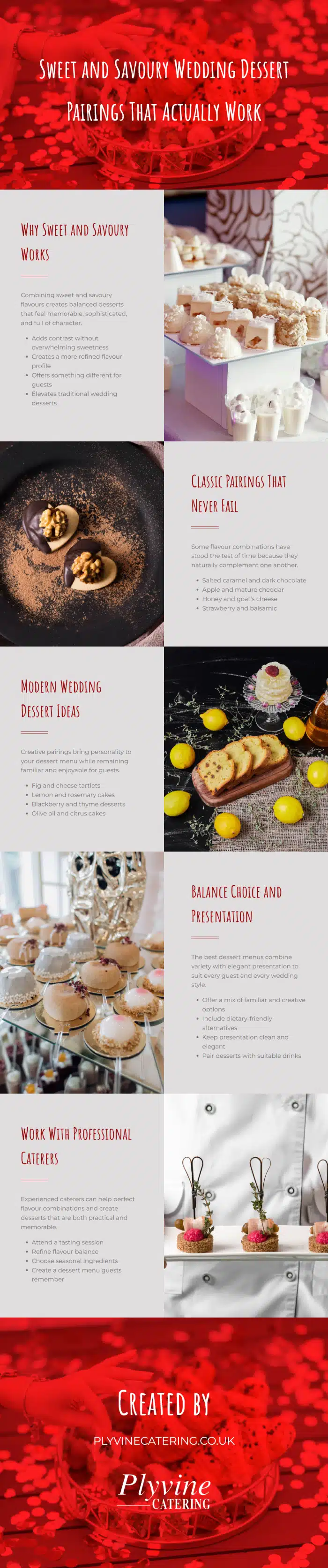
Dessert is one of the most anticipated parts of any wedding meal, but modern couples are increasingly looking beyond the traditional choice of cake followed by something sweet. One of the most interesting ways to make the final course more memorable is to combine sweet and savoury flavours, creating desserts that feel balanced, sophisticated, and a little unexpected without becoming difficult for guests to enjoy.
Sweet and savoury pairings work because they create contrast. Rich chocolate becomes more interesting with a touch of sea salt, ripe fruit gains extra depth when matched with cheese, and buttery pastry can be transformed by combining caramelised ingredients with subtly savoury flavours. The key is restraint. A wedding dessert should still feel like a treat, with the savoury element supporting the sweetness rather than competing with it.
Whether you are planning a formal wedding breakfast, a relaxed countryside celebration, a summer reception, or an evening dessert station, carefully chosen flavour combinations can help you create something genuinely memorable. The following ideas show how sweet and savoury wedding desserts can work beautifully when flavour, presentation, and guest appeal are considered together.
Salted Caramel and Dark Chocolate
Salted caramel and dark chocolate has become a modern classic because the flavours naturally balance one another. The salt prevents the dessert from becoming overly sweet while intensifying the richness of the chocolate.
It works particularly well for indulgent wedding desserts.
- Dark chocolate tart with salted caramel
- Salted caramel chocolate mousse
- Mini chocolate and caramel pots
- Chocolate truffles with sea salt
Pear and Blue Cheese
Pear and blue cheese is a sophisticated combination that works particularly well for couples who want something less traditionally sweet.
The fruit provides natural sweetness while the cheese adds depth.
- Poached pear with blue cheese
- Pear tart with a savoury cheese element
- Pear and walnut dessert plates
- Mini pear and cheese canapés
Apple and Cheddar
Apple and cheese have been enjoyed together for generations, making this an excellent way to introduce savoury flavours without creating something too unfamiliar.
The combination feels comforting yet distinctive.
- Apple tart with mature cheddar
- Mini apple pies with cheese pastry
- Caramelised apple and cheddar bites
- Apple chutney with cheese biscuits
Honey and Goat’s Cheese
The creamy tang of goat’s cheese works beautifully with the floral sweetness of honey, especially when combined with nuts or fresh fruit.
This pairing feels elegant without being heavy.
- Honeyed goat’s cheese tart
- Goat’s cheese cheesecake
- Fig, honey, and goat’s cheese bites
- Walnut and honey garnish
Strawberry and Balsamic
Strawberries naturally suit wedding desserts, while balsamic vinegar adds acidity and complexity that enhances their sweetness.
A small amount creates a surprisingly refined flavour.
- Strawberries with balsamic reduction
- Strawberry panna cotta
- Balsamic strawberry tartlets
- Strawberry and mascarpone desserts
Fig and Cheese
Figs bridge the gap between sweet and savoury exceptionally well, making them perfect for wedding menus that want to combine both.
They pair with a wide variety of cheeses and textures.
- Fig and goat’s cheese tartlets
- Fig with mascarpone
- Baked figs with honey
- Fig and cheese grazing plates
Chocolate and Chilli
Chocolate and chilli can create an exciting finish when the heat is carefully controlled. The aim is warmth and depth rather than overwhelming spice.
Used subtly, it creates a memorable dessert.
- Chilli chocolate truffles
- Dark chocolate mousse with mild chilli
- Chocolate tart with spiced ganache
- Mini chilli chocolate brownies
Caramel and Miso
Miso caramel has become a popular flavour combination because its savoury, fermented character brings complexity to traditional caramel.
It works particularly well in small, elegant portions.
- Miso caramel tart
- Miso caramel cheesecake
- Caramel mousse with miso
- Mini caramel dessert pots
Peach and Prosciutto-Inspired Flavours
Sweet ripe peaches work beautifully alongside salty flavours, creating a combination that feels especially suited to summer weddings.
Careful presentation keeps the dessert elegant.
- Grilled peach with savoury accents
- Peach and mascarpone tart
- Honeyed peach crostini
- Peach with herb-infused cream
Maple and Bacon-Inspired Flavours
Sweet maple and smoky flavours can work surprisingly well for relaxed weddings, particularly as part of an evening dessert or brunch-inspired menu.
The key is keeping portions small and balanced.
- Maple glazed pastry bites
- Maple doughnuts with savoury crumb
- Mini waffles with maple toppings
- Maple caramel desserts
Rosemary and Lemon
Herbs are an excellent way to introduce savoury characteristics without making a dessert feel too unconventional. Rosemary works particularly well with citrus.
The result is fragrant and refreshing.
- Lemon and rosemary tart
- Rosemary shortbread
- Lemon panna cotta with herbal syrup
- Mini citrus cheesecakes
Thyme and Blackberry
Blackberries have a rich sweetness that pairs naturally with aromatic herbs such as thyme.
This combination works beautifully for late summer weddings.
- Blackberry and thyme tartlets
- Blackberry cheesecake
- Herb-infused berry compote
- Blackberry panna cotta
Olive Oil and Citrus
High-quality olive oil can add a silky texture and subtle savoury quality to desserts without dominating the flavour.
Citrus keeps the overall result fresh.
- Olive oil and lemon cake
- Orange olive oil sponge
- Citrus tart with olive oil cream
- Mini olive oil cakes
Cheese and Dessert Boards
Couples do not necessarily need to combine sweet and savoury ingredients within a single dessert. A combined cheese and dessert table allows guests to create their own pairings.
Choice makes this particularly effective for larger weddings.
- Artisan cheeses
- Fresh and dried fruit
- Chocolates and petit fours
- Crackers, chutneys, and honey
Dark Chocolate and Sea Salt
Sometimes the simplest sweet and savoury pairings are the most effective. Sea salt enhances chocolate without changing its essential character.
It is a safe option for broad guest appeal.
- Salted chocolate tart
- Chocolate brownies with sea salt
- Dark chocolate truffles
- Salted chocolate cookies
Nuts Add Natural Savoury Contrast
Nuts provide texture, richness, and subtle savoury flavours that complement many traditional desserts.
They can also make familiar dishes feel more sophisticated.
- Pistachio and raspberry
- Walnut and honey
- Hazelnut and chocolate
- Almond and cherry
Pair Desserts With Savoury Drinks
The balance between sweet and savoury does not have to come entirely from the plate. Drinks can create the same contrast.
Thoughtful pairings complete the experience.
- Coffee with rich chocolate desserts
- Tea with fruit-based dishes
- Dessert wines with cheese
- Alcohol-free botanical drinks
Keep Guest Appeal in Mind
Creative wedding food should still be enjoyable for the majority of people attending. Very experimental combinations can be exciting, but they should not dominate the entire dessert offering.
Balance creativity with familiarity.
- Include recognisable flavours
- Offer more than one dessert choice
- Keep stronger savoury elements subtle
- Consider different age groups
Presentation Makes the Pairing Clear
Sweet and savoury desserts work best when they look deliberate rather than confusing. Professional presentation helps guests understand what they are being served.
Visual balance reinforces flavour balance.
- Keep plating clean and elegant
- Use garnishes with purpose
- Avoid overcrowding the plate
- Make individual elements identifiable
Work With Your Caterer to Test Combinations
A tasting is particularly valuable when introducing less familiar flavour combinations because it allows couples to judge the balance before committing to the menu.
Professional input can refine an idea significantly.
- Test sweetness levels
- Adjust savoury elements
- Compare alternative ingredients
- Consider service practicality
Conclusion
Sweet and savoury wedding desserts offer couples an opportunity to move beyond predictable final courses while still creating food that guests genuinely enjoy. The most successful pairings use contrast carefully, allowing salt, herbs, cheese, spices, or other savoury elements to enhance sweetness rather than overpower it.
From salted caramel and dark chocolate to figs and cheese, honey and goat’s cheese, or strawberries with balsamic, there are countless ways to introduce more depth into a wedding dessert menu. The best approach is to combine creativity with familiarity, ensuring every pairing feels intentional, balanced, and appropriate for the occasion. With thoughtful planning and professional execution, sweet and savoury desserts can provide a memorable final course that guests continue discussing long after the wedding day.