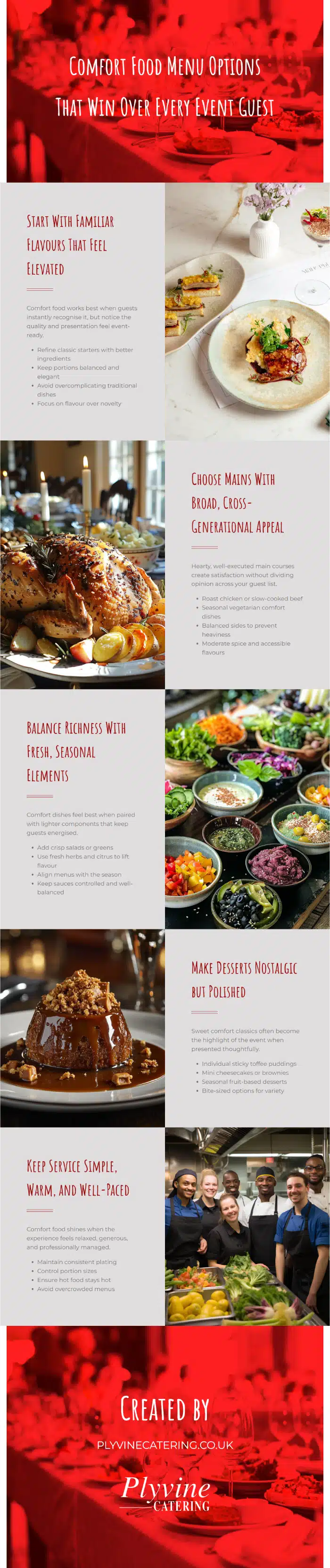
Comfort food holds a unique place in event catering. It is familiar, reassuring, and instantly recognisable, yet when executed well, it can still feel refined and celebratory. Whether you are planning a wedding, corporate gathering, birthday party, or community event, comfort-led menus often appeal to the widest range of guests. The key is elevating the classics without losing the warmth that makes them so universally loved.
When guests feel comfortable with what is on their plate, they relax. Conversation flows more easily. There is less hesitation around trying something unfamiliar, and more enjoyment in every bite. This guide explores comfort food menu options that consistently win over event guests, while still feeling polished and appropriate for a professional catering setting.
Elevate Classic Starters Without Losing Familiarity
Starters set the tone for the meal and create the first impression. Comfort-inspired starters work best when they take something familiar and present it in a more refined way. The aim is not to reinvent classics entirely, but to enhance them with quality ingredients and thoughtful presentation. When guests recognise the dish but notice the care in execution, it immediately builds confidence in the menu.
- Serve miniature soups with artisan bread instead of large bowls
- Offer crisp arancini or croquettes with balanced dipping sauces
- Present prawn cocktail in elegant glassware
- Keep portion sizes light to avoid heaviness early on
Choose Crowd-Pleasing Main Courses With Broad Appeal
Main courses rooted in comfort food traditions often deliver the highest satisfaction levels. Dishes that feel hearty but balanced ensure guests leave the table content without feeling overwhelmed. The trick is to keep flavours bold yet familiar, while avoiding overly complex combinations that risk dividing opinion. Reliable favourites, executed well, rarely disappoint.
- Roast chicken with seasonal vegetables and jus
- Slow-cooked beef with creamy mash
- Baked salmon with simple herb dressing
- Vegetarian wellington with rich but balanced filling
Reimagine Traditional British Favourites
British comfort dishes carry strong emotional associations and tend to resonate across age groups. When planning event menus, these classics can be adapted to feel more contemporary without losing their essence. Guests appreciate the nod to tradition, especially when the presentation feels elevated rather than casual.
- Individual pies with golden pastry lids
- Refined fish and chips with crisp batter
- Sausage and mash with caramelised onion gravy
- Cottage pie topped with smooth piped potato
Incorporate Pasta Dishes That Feel Indulgent Yet Balanced
Pasta is one of the most universally loved comfort foods. It feels generous and satisfying, but can also be styled to suit both formal and informal events. Rich sauces should be balanced with fresh elements to prevent heaviness, particularly at evening receptions or corporate functions.
- Creamy chicken and mushroom pasta
- Slow-cooked tomato and basil rigatoni
- Spinach and ricotta cannelloni
- Pesto pasta with roasted vegetables
Offer Plant-Based Comfort Options That Feel Complete
Comfort food does not need to centre on meat to feel satisfying. Plant-based dishes can deliver warmth and depth when designed thoughtfully. Including these options naturally within the menu ensures inclusivity without making alternatives feel secondary.
- Lentil and root vegetable shepherd’s pie
- Creamy mushroom risotto
- Roasted aubergine with spiced tomato sauce
- Butternut squash and sage ravioli
Design Sharing Boards for Relaxed Events
Sharing boards bring comfort food into a more sociable format. They encourage interaction and make the table feel abundant without requiring formal service structures. For weddings or informal celebrations, this format feels warm and generous.
- Mixed artisan breads with flavoured butters
- Cheese boards with chutneys and crackers
- Charcuterie with seasonal accompaniments
- Rustic savoury tart selections
Include Sides That Enhance Rather Than Overwhelm
Side dishes are often where comfort food menus shine. Well-chosen accompaniments add texture and contrast without complicating the plate. Balance is crucial, especially when the main course already carries rich elements.
- Creamy mashed potatoes or dauphinoise
- Buttered seasonal greens
- Honey-glazed carrots
- Crisp garden salads with light dressing
Elevate Comfort Food for Canapé Receptions
Even canapé events can benefit from comfort-inspired bites. Small portions of familiar flavours create instant recognition and warmth. The format may be miniature, but the flavour should remain bold and satisfying.
- Mini sliders with quality beef or plant-based patties
- Bite-sized mac and cheese portions
- Mini Yorkshire puddings with roast beef
- Individual fish goujons with tartare sauce
Balance Richness With Fresh Elements
Comfort food often leans toward richness, which makes balance essential. Adding fresh herbs, crisp vegetables, or light dressings prevents dishes from feeling heavy. Guests appreciate menus that satisfy without exhausting the palate.
- Pair creamy dishes with bright salads
- Use citrus to lift richer flavours
- Incorporate fresh herbs for contrast
- Keep sauces controlled rather than excessive
Plan a Dessert Selection That Feels Nostalgic
Desserts are where comfort food truly shines. Familiar sweets create emotional connection and often become the most talked-about part of the meal. The key is presenting them in a way that feels refined enough for the occasion.
- Individual sticky toffee puddings
- Lemon drizzle cake with light glaze
- Chocolate brownie with elegant plating
- Classic apple crumble served neatly portioned
Offer Bite-Sized Dessert Options for Variety
For larger events, offering smaller dessert portions allows guests to sample more than one option. This maintains a sense of indulgence without overwhelming them. Bite-sized servings work particularly well at weddings and evening receptions.
- Mini cheesecakes in glass jars
- Brownie bites dusted with icing sugar
- Mini pavlovas with fresh fruit
- Shortbread squares with subtle decoration
Keep Drinks Pairings Simple and Supportive
Comfort food pairs best with drinks that enhance rather than compete. Overly complex cocktails can distract from the menu, whereas well-selected wines and simple drinks maintain harmony. Balance is key to sustaining enjoyment.
- Medium-bodied red wine for hearty mains
- Crisp white wine for lighter dishes
- Sparkling wine for celebratory moments
- Non-alcoholic options that feel considered
Design Menus That Span Generations
One reason comfort food performs so well at events is its cross-generational appeal. Grandparents and younger guests alike often gravitate toward familiar dishes. Designing menus that avoid polarising flavours increases overall satisfaction.
- Choose flavours widely recognised
- Avoid overly experimental combinations
- Keep spice levels moderate
- Offer at least one universally loved option
Present Comfort Food With Polished Service
Even the most rustic dish can feel refined with thoughtful presentation. Clean plating, coordinated service timing, and attention to detail elevate comfort food to event standard. The food remains familiar, but the experience feels special.
- Use consistent plating across tables
- Ensure hot dishes are served promptly
- Keep garnishes subtle and intentional
- Maintain attentive but discreet service
Adapt Comfort Food to Seasonal Events
Seasonality enhances comfort menus naturally. Hearty roasts feel ideal in autumn and winter, while lighter comfort classics suit spring and summer gatherings. Aligning dishes with the time of year keeps menus relevant and satisfying.
- Feature roasted root vegetables in colder months
- Highlight fresh salads and lighter mains in summer
- Use seasonal fruits in desserts
- Adjust portion sizes for climate comfort
Create Late-Night Comfort Options for Weddings
Evening receptions often benefit from late-night comfort snacks. Familiar favourites provide energy and encourage guests to stay engaged on the dance floor. These additions feel generous without requiring full meal service.
- Mini bacon rolls or vegetarian equivalents
- Small pizza slices
- Loaded fries in individual cups
- Gourmet sausage rolls
Avoid Overcomplicating the Concept
The strength of comfort food lies in its simplicity. Over-embellishing classic dishes risks losing what makes them appealing. Keep flavours authentic and allow quality ingredients to speak for themselves.
- Stick to recognisable flavour profiles
- Avoid unnecessary fusion elements
- Keep menus focused rather than crowded
- Maintain balance between courses
Ensure Portion Control to Prevent Waste
Comfort food can be filling, so portion control matters. Guests should feel satisfied but not overly full, especially at multi-course events. Balanced serving sizes protect both guest comfort and budget.
- Keep main courses moderate in size
- Offer smaller dessert portions
- Avoid stacking heavy sides together
- Monitor guest consumption patterns
Conclusion
Comfort food menu options consistently win over event guests because they combine familiarity with satisfaction. When designed thoughtfully, these dishes feel warm and welcoming without sacrificing refinement. From elevated British classics and indulgent pasta dishes to nostalgic desserts and late-night snacks, comfort-led menus deliver reliable enjoyment across diverse guest lists.
The key to success lies in balance. Quality ingredients, careful presentation, seasonal awareness, and controlled portion sizes transform simple favourites into event-worthy dishes. When guests recognise what is on their plate and trust the execution, they relax into the celebration. In the end, comfort food is not about simplicity alone. It is about creating a shared sense of ease and enjoyment that enhances every occasion.